
We Asked Why So Many DIY Furniture Projects End Up Half-Built in the Garage.
Affiliate Disclosure: This article about Ted's Woodworking contains affiliate links. If you purchase through our links, we may earn a commission at no additional cost to you. We only recommend products we genuinely believe in. Read our full disclosure.
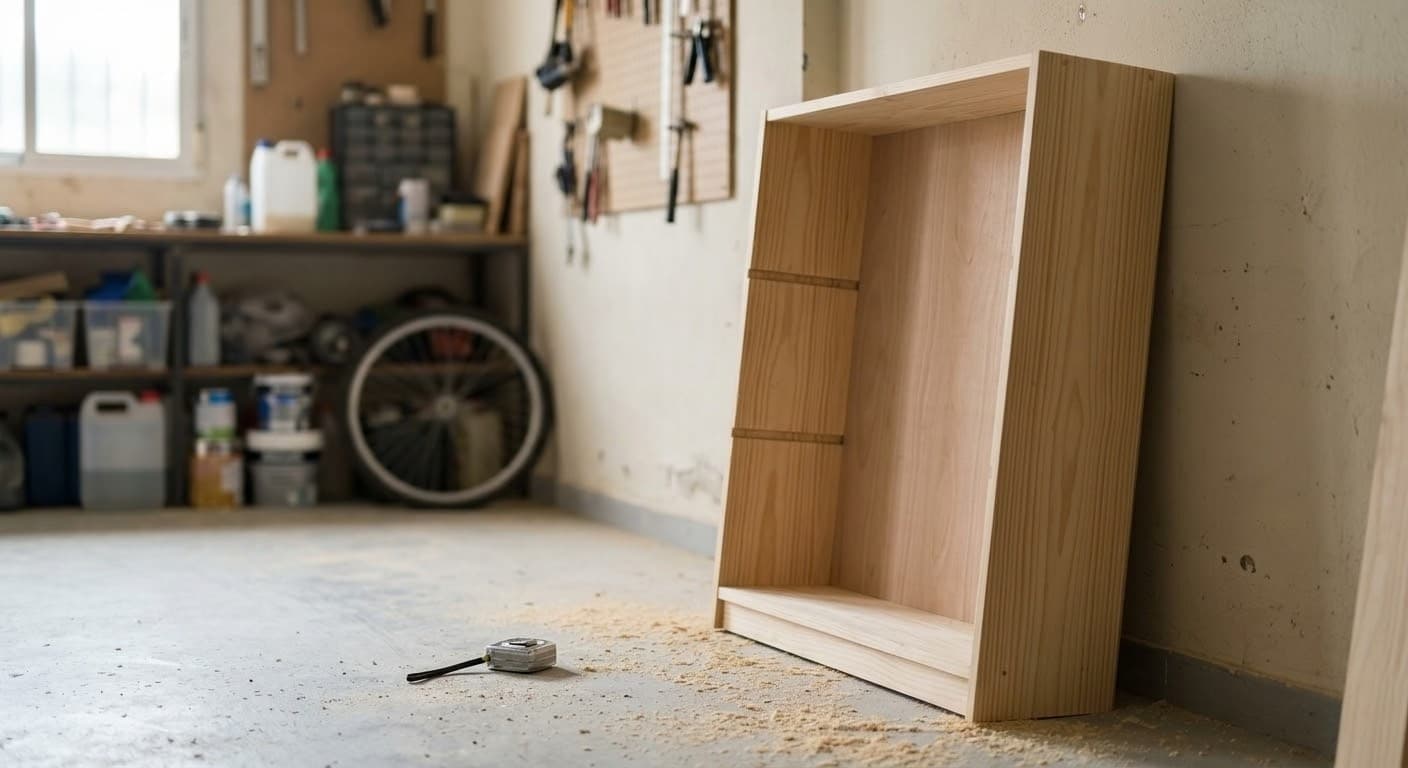
James can tell you exactly what's in his garage without looking.
A bookcase frame — the sides and back are built, the shelf dados are cut, but the shelves themselves don't fit because the dado depth was off. A coffee table base — all four legs are turned and the stretchers are cut, but the mortises he cut for the top attachment are in the wrong position. A set of floating shelves — three of the five are installed, but he ran out of the right fasteners and somehow never went back to finish the last two.
He's a reasonably competent person. He owns a house and maintains it. He's not someone who starts things and doesn't finish them, as a general rule.
But the garage tells a different story.
"I don't have a finishing problem. I have a plan problem. The difference is I didn't figure that out until I'd built three things that proved it."
We looked into this because James's collection of half-built projects represents a pattern we saw consistently across the homeowners and DIY builders we spoke with.
The Anatomy of an Abandoned Project
DIY furniture projects get abandoned at specific points for specific reasons. We looked at where those points are.
The bookcase James started had a dado problem. Dadoes — the channels cut into a piece to accept a shelf or panel — need to match the actual thickness of the material being inserted. His plan specified 3/4-inch dados for 3/4-inch plywood. The plywood he bought, which was labeled 3/4 inch, measured 23/32 inch — a standard sizing tolerance that the plan hadn't accounted for. The shelves didn't fit. He set the project aside planning to figure out how to fix it. He hasn't gone back.
The coffee table had a layout problem. The mortise positions for the top attachment were specified in the plan relative to the finished leg dimensions, but the plan didn't clarify whether those dimensions were before or after final surfacing. James cut them relative to his rough dimensions. The positions were off. The top didn't sit flat.
The floating shelves have a momentum problem. Three are done. The remaining two require a return trip for a specific fastener size. That trip hasn't happened because it keeps getting displaced by more pressing things.
None of these failures required exceptional skill to avoid. The dado problem required a plan that accounted for actual lumber tolerances. The mortise problem required a plan that specified the measurement reference clearly. The floating shelves problem required a plan that listed all necessary hardware before the project started.
What Documentation Failure Costs
The financial cost of James's abandoned projects is real: lumber and hardware purchased and not used for their intended purpose, time invested in partial builds that didn't produce functional furniture. The furniture he meant to build for his house is furniture he hasn't built — which means he's either living without it or buying it retail at prices that erase the savings his DIY projects were supposed to deliver.
The less quantifiable cost is the accumulated reluctance to start new projects. Each abandoned build makes the next project feel riskier. The garage is evidence of failed attempts rather than completed work. Starting something new means accepting the possibility of adding to that evidence.
What a Different Starting Point Changes
We investigated Ted's Woodworking because the testing model it describes addresses the three failure points James hit.
The dado tolerance issue is caught when the plan is built using real materials — a test builder will encounter the same sizing discrepancy and the plan will be revised to account for actual dimensions. The mortise reference issue is caught when the test builder reaches that step and the instructions are ambiguous — that ambiguity gets flagged and resolved. The incomplete hardware list is caught because the test build requires the full hardware list to be present.
The library covers over 16,000 projects with plans verified through physical construction. Cut lists specify actual lumber dimensions. Hardware lists include everything required for the complete build. Assembly notes specify measurement references and sequencing explicitly.
For James, the practical effect is a garage that looks different. Not because he builds faster, but because the projects he starts are built from documentation that was designed to produce finished results.
Understanding how cut list accuracy affects the entire build process is worth spending time on before starting any project — the problems James encountered are among the most preventable in woodworking.
What We'd Note Before Starting
Ted's Woodworking is a digital library. Plans are downloaded for workshop use. Lifetime access on a one-time purchase, with new plans added monthly.
The keyword search handles specific project requests efficiently. The library's size — 16,000 plans — is its main navigation challenge; the category filters help narrow results for users who are browsing by project type.
This Is For You If…
- You have unfinished projects in your garage and understand why they stopped
- You want furniture plans that account for actual lumber dimensions, not nominal specs
- You're a homeowner who builds to furnish your own space and wants accurate materials documentation
- You value hardware lists that include everything needed before the build starts
This Is NOT For You If…
- You write your own plans from original designs
- You want physical printed materials rather than a digital library
- You're looking for a single specific plan rather than ongoing access
- You need plans for structural construction applications
What the Garage Looks Like Now
James finished the bookcase. The coffee table is done. The remaining two floating shelves went up on a Tuesday evening after work.
His garage still has projects in it — but they're active ones. Current builds, not abandoned ones. The distinction matters more than it sounds.
Recommended Resource
16,000 Plans. Every One Built and Tested Before You See It.
Actual lumber dimensions. Complete hardware lists. Assembly notes that specify what the plan means — not what you'll have to figure out on your own.
See the Complete Plan Library →Affiliate link — we earn a commission at no cost to you.