
Why Your Cutting List Is Always Off — And What a Correct One Looks Like.
Affiliate Disclosure: This article about Ted's Woodworking contains affiliate links. If you purchase through our links, we may earn a commission at no additional cost to you. We only recommend products we genuinely believe in. Read our full disclosure.
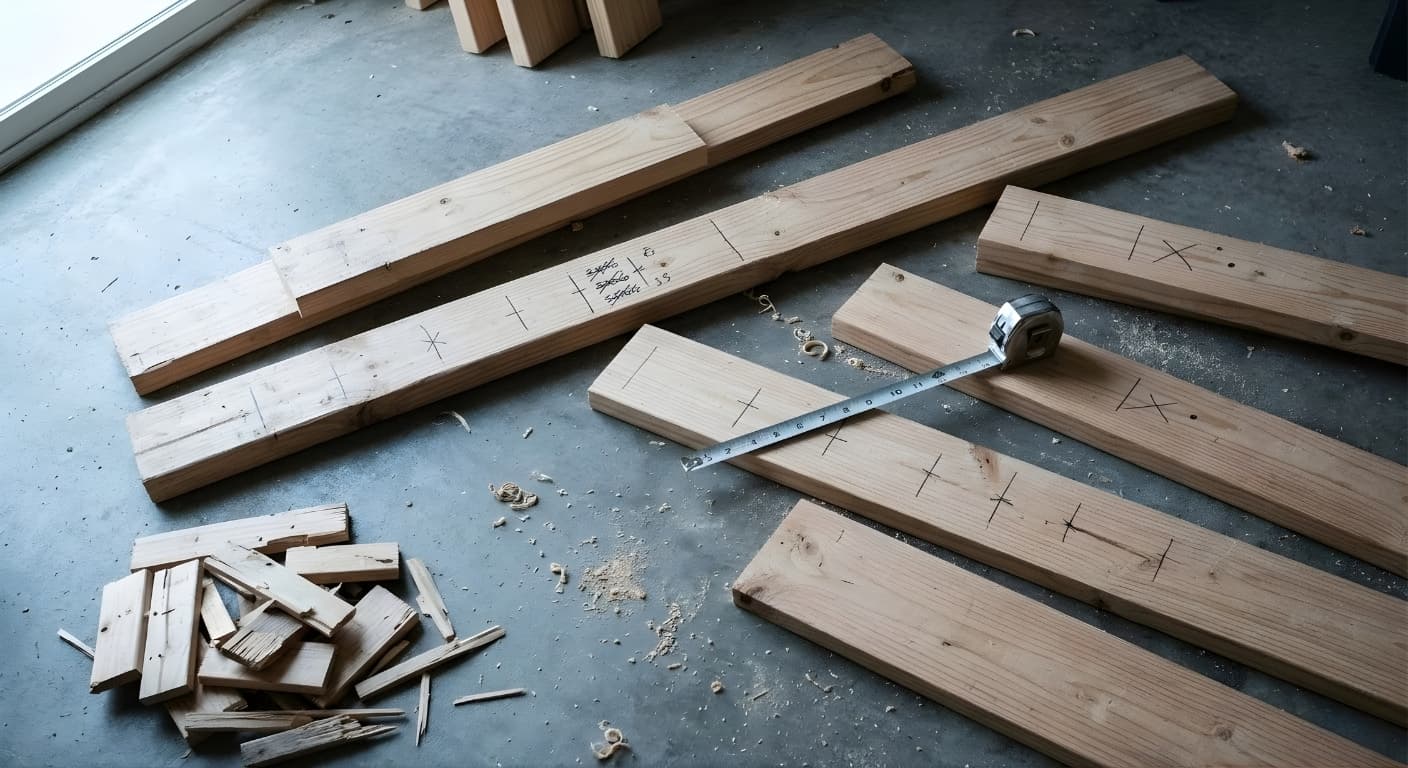
James has a running joke with himself about hardware store trips.
He calls them "plan taxes." Every project has them — the return visit for the hardware the list forgot, the second trip for the extra board that turns out to be necessary, the third one for the finishing supplies that weren't mentioned at all. He's become familiar with the layout of two different hardware stores in his area because he's been to each of them so many times mid-project.
He doesn't find the joke as funny as he used to.
"I stopped assuming a cut list was accurate. I started treating every plan like a starting point that I'd need to figure out the rest of on my own."
We looked into the specific problem of cut list accuracy because James's experience — buying exactly what the plan says and discovering it's not enough — is structurally predictable and has consistent causes.
Why Cut Lists Are Systematically Wrong
The most common cut list error in woodworking plans is the confusion between nominal and actual lumber dimensions. Dimensional lumber is sold by nominal size — a "2x4" is named for its rough-cut dimensions before drying and surfacing. The actual dimensions of a standard 2x4 are 1.5 inches by 3.5 inches.
This distinction matters when pieces need to fit together. A plan that specifies a dado joint at 3/4 inch to accept a 3/4-inch shelf is correct if the shelf material is actual 3/4-inch plywood — but plywood sheets labeled 3/4 inch typically measure 23/32 inch. A dado cut to nominal spec will have visible gaps. A plan written from design software rather than physical measurement won't catch this.
The second common error is omission. Cut lists frequently specify the primary structural lumber while omitting secondary materials: the biscuits or pocket screws for the joints, the wood filler for the nail holes, the sandpaper grits needed for finishing, the specific hinge hardware for doors. These items are obvious to an experienced builder who's built the piece before. They're invisible to a first-time builder following a list that doesn't mention them.
The third error is quantity calculation that doesn't account for waste. Lumber is sold in standard lengths. A cut list that specifies "2 pieces at 44 inches" without noting that these should be cut from an 8-foot board (which yields exactly two at 44 inches with no waste) leaves the builder to figure out the most efficient cutting pattern independently. A list that doesn't note this may lead to buying an extra board unnecessarily, or to cutting inefficiently and running short.
What Accurate Documentation Requires
We investigated Ted's Woodworking specifically because of its documented approach to materials accuracy. The testing model involves building each plan from a materials list before publication — which means the list is verified against what was actually needed to complete the build, not what was theoretically specified in a design document.
The process catches the nominal/actual dimension issue because the plans are built with real lumber, not designed in software. It catches omissions because the builder who tests the plan needs every item on the list to be there. It catches quantity errors because the test build requires actually sourcing materials from the list.
The result, according to the documentation, is cut lists that specify exact quantities down to the last screw, account for actual material dimensions, and include all finishing and hardware requirements.
For James, the practical implication is a project that can be shopped for in a single hardware store trip. The plan tax disappears when the list is accurate — not because hardware stores get closer, but because there's no reason to go back.
The same principle applies to any build project where materials documentation determines whether the work gets done efficiently or not — and the difference between a complete list and an incomplete one shows up in the first twenty minutes of a project.
Recommended Resource
The Real Reason Your Projects Don't Turn Out the Way You Picture Them
Most cut lists were never verified against real lumber. Ted McGrath built a testing process that catches every omission before the plan reaches you.
See What a Complete Plan Looks Like →Affiliate link — we earn a commission at no cost to you.
What We'd Note Before Starting
Ted's Woodworking is a digital library with over 16,000 plans. Access is lifetime on a one-time purchase, with new plans added monthly at no additional cost. Plans are downloaded and printed as needed for workshop use.
The library requires some navigation to become familiar with. The search function works well for specific project types. Category filters — furniture, outdoor, storage, workshop — help when browsing. Users with a specific project in mind typically locate it within a few minutes.
This Is For You If…
- You've experienced the frustration of incomplete cut lists and mid-project hardware store trips
- You want materials documentation you can trust to be complete before you start buying
- You're a homeowner who builds furniture and built-ins and wants a reliable plan library
- You value the time saved by shopping for a project in a single trip
This Is NOT For You If…
- You're an experienced woodworker who creates your own cut lists from original designs
- You want physical printed materials rather than a digital library
- You need plans for structural construction applications
- You're only looking for a single specific plan
James's Hardware Store Trips
He still goes to the hardware store. Woodworking requires that. But the trips are planned now. He looks at the list, confirms what he has, makes a single shopping run, and starts the project with everything he needs.
The plan tax is gone. What replaced it is the time he used to spend driving back for the hardware the list forgot — which he now spends in the workshop building things for his house.
Recommended Resource
16,000 Plans. Every One Built and Tested Before You See It.
Complete cut lists down to the last screw. Verified measurements. Everything you need to shop once and build without interruption.
See the Complete Plan Library →Affiliate link — we earn a commission at no cost to you.